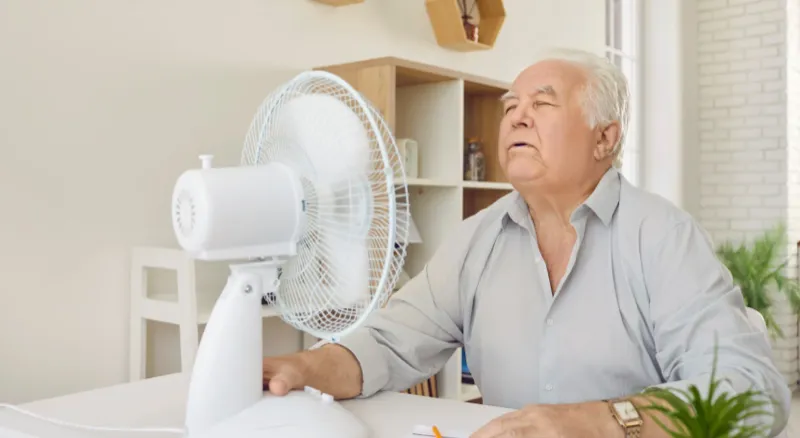
A warm, sunny day is one of life's simple pleasures. But hot weather carries real risks for older adults — and those risks often go unnoticed until someone is already unwell. A little awareness, and a familiar face checking in, can make all the difference.
Why heat affects older people more
As we age, the body becomes less efficient at regulating its own temperature. We feel thirst less keenly, sweat less effectively, and many common medications can affect how the body copes with heat. Add in a long-term health condition or living alone, and a hot spell can quickly become dangerous rather than pleasant.
"The danger with heat is how quietly it creeps up. Someone can feel 'just a bit tired' when their body is actually struggling."
The warning signs to watch for
Heat exhaustion can develop gradually. Look out for:
- Feeling faint, dizzy or unusually tired
- Headache, or muscle cramps
- Confusion or being more muddled than usual
- Cool, pale or clammy skin, or excessive sweating
- Dark urine or going to the toilet less often (a sign of dehydration)
If someone becomes very hot, stops sweating, is confused or unwell, treat it as an emergency and call 999 — this can be heatstroke, which is serious.
Free family checklist
Keeping a gentle eye on an older parent this summer? Our free printable checklist gathers the 12 early signs they may need a little more support day to day. Download the free checklist →
Simple ways to stay cool and safe
- Sip regularly — water, squash or fruit juice through the day, even without feeling thirsty. Limit very strong tea, coffee and alcohol.
- Keep the home cool — close curtains on sunny windows, open windows when the air outside is cooler (often early morning and evening).
- Dress for it — light, loose cotton clothing, and a hat and shade when outdoors.
- Time it well — avoid going out in the hottest part of the day, usually 11am to 3pm.
- Cool down — a cool flannel on the neck and wrists, or a cool (not cold) shower, brings quick relief.
- Eat light and watery — fruit, salads and cold meals add fluids and feel easier in the heat.
How a companion helps in a heatwave
During warm spells, a regular visit becomes a quiet safety net — encouraging a drink, opening up the house, drawing the curtains, picking up cold groceries, and simply noticing if something isn't right. For families who live further away, that reassurance is priceless.
Worried about a loved one in the warmer months?
Let's have a free, no-pressure chat about how a regular friendly visit could help them stay safe and comfortable.
Sign up for a no obligation conversationNot ready for a chat just yet? Start with our free family checklist →